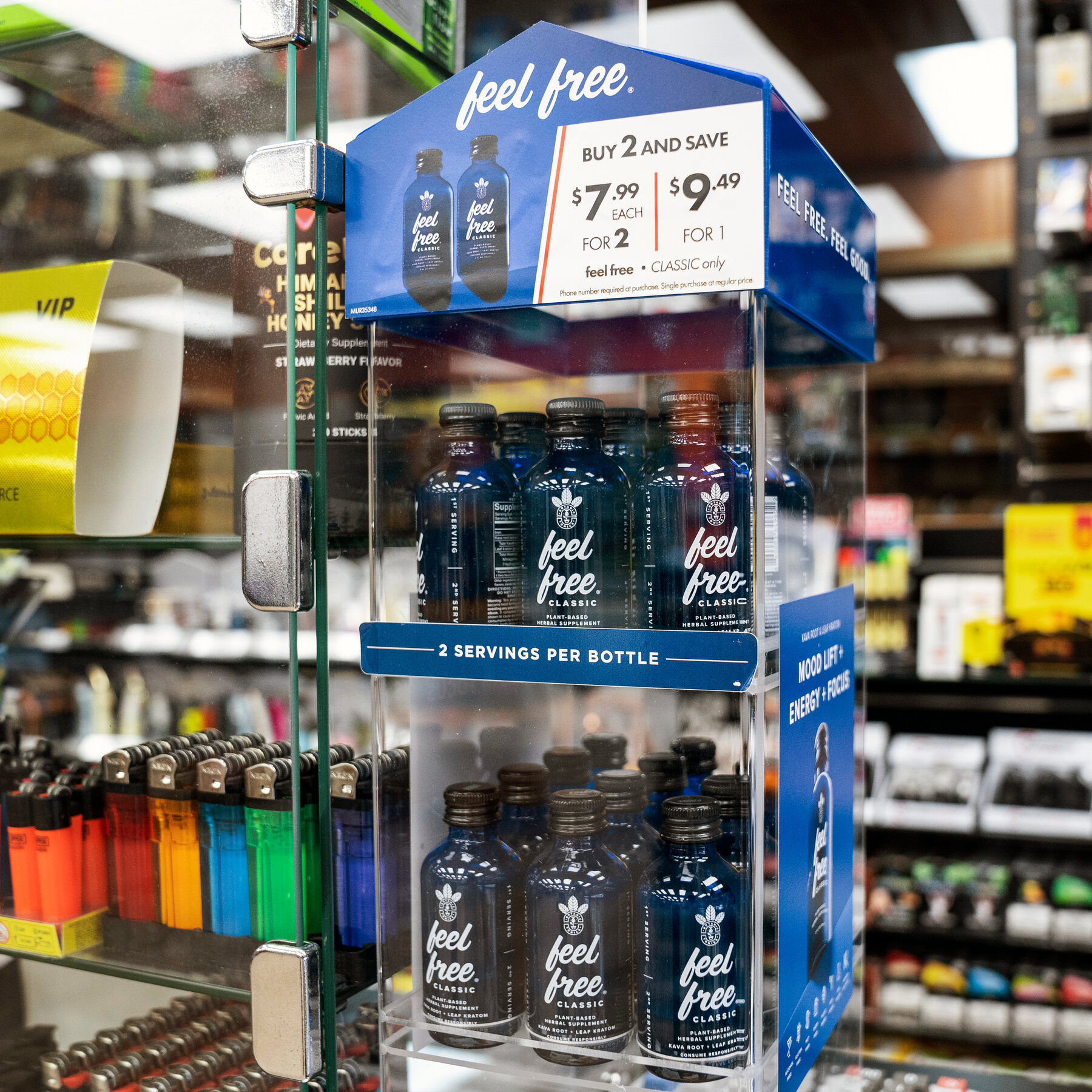
AdvertisementSKIP ADVERTISEMENTYou have been granted access, use your keyboard to continue reading.interesting timesThe biotech billionaire who wants to rebuild your body and blow your mind.June 11, 2026VideoBetter Sex, Better Hair, Better Sleep: ‘Humanmaxxing’ Is HereThe biotech billionaire who wants to rebuild your body and blow your mind.CreditCredit...The New York TimesWe can enhance athletic performance, lose weight with a pill and even take psychedelics to alter consciousness.
At what point does all this self-optimization become self-obsession? When does it get in the way of our humanity itself? My guest this week is the German biotech entrepreneur Christian Angermayer, who believes scientific breakthroughs to extend our lives — and even put us in touch with the divine — are close at hand.Better Sex, Better Hair, Better Sleep: ‘Humanmaxxing’ Is HereThe biotech billionaire who wants to rebuild your body and blow your mind.Listen · 1 hr 11 minBelow is an edited transcript of an episode of “Interesting Times.” We recommend listening to it in its original form for the full effect.
You can do so using the player above or on the NYTimes app, Apple, Spotify, Amazon Music, YouTube, iHeartRadio or wherever you get your podcasts.Ross Douthat: Christian Angermayer, welcome to “Interesting Times.”Christian Angermayer: Thank you for having me.Douthat: You’ve probably heard that recently, the pope put out an encyclical, a big document, on artificial intelligence.
And one of the most striking passages in that document was a critique of what the pope called transhumanism.Basically, you could define it as the idea that a lot of the fundamental constraints that human beings face — aging, illness, mental suffering, maybe even mortality itself — are things that eventually technology, drugs, science can help us overcome.I think that made me want to talk to you, because you’re an advocate of what you call the next human agenda, which includes enhancing human athletic performance, using psychedelics to alter human consciousness and figuring out — just maybe — how to extend the human life span.I’m interested in all this practically and how it might change the world.
I’m also personally interested in figuring out where I draw the line between breakthroughs that make us healthier and fitter, and breakthroughs where I might be on the pope’s more skeptical side. So that’s what we’re going to talk about.Tell me first: What is the next human agenda, and how would you define your own philosophy?Angermayer: I used to use the word “transhumanism.” Then I realized that people have a negative reaction, not because they don’t understand it, but I think the association is — and again, I haven’t read the encyclical yet, I want to — but my gut feeling is that he falls into the same trap, where “transhumanism” makes people think: Oh, we’re humans now, and then we’re something else.Because that’s obviously the Latin word, “trans.” And that creates a counterreaction, which I understand because that’s not what I want to say.So I actually started using the word, which is now also very funny because it’s used in another funny context — “maxxing.”Douthat: Maxxing.
Oh, yeah. Humanmaxxing.Angermayer: But it’s, like, human maximization. I don’t think we should become something different, because I think humans are awesome, but I think we can maximize the potential which is already in us.So to your question, what we define as “next human agenda” is using technology, science and progress to really maximize both our physical appearance and our life, because it can also be something outside of us.For example, A.I. and robotics will definitely minimize the need for human labor in a positive way.
A lot of people are frightened by that, but if you think it through, I think it can actually be a much more human society.Because the question is: Are we really meant to work 10 hours a day? Isn’t it more human being with friends and being a social animal?In many ways, I think technology will both help us explore and sort of, yeah, improve.
Again, “improve” sounds like [unintelligible]. It’s just an add-on on our body and mind and on the world around us.In short, I’m a very optimistic person where science and technology lead us.Douthat: So give me just a couple of examples of the kinds of things that you’re invested in or involved in in this space.
And then we’ll drill down into some of the subjects.Angermayer: Well, my favorite one is always psychedelics. With a narrow view, they have the potential to really change how we treat mental health issues, which is already huge.And it’s only growing, I think, because humans are very anti-change.
And we will, actually, in the next 10 years, go through the biggest change in the shortest period of time that humanity has ever had to do. This will create a lot of fear, and I think psychedelics can actually help guide people, or help them adjust humanity to a radically different future.
So psychedelics is one thing.I started two very successful longevity companies, where we work in slowing down and, ultimately, reversing what we colloquially call aging, which is not a single disease, but is more complex.We’re doing a lot in A.I. and robotics.
We’re also doing a lot in sports.Why sports? Because I believe — again, I deeply believe, I cannot see it differently — that A.I. and robotics will massively reduce the need for human labor. I can totally see a very positive society because I think that sort of attachment we have to “we must have a job” is a narrative that, yes, we gave it to ourselves as humanity over the last, I don’t know, 8,000 years, because it was holding society together.But if you go to an individual factory worker in China and say: Hey, do you want to have the same quality of life and half of the work?
This person will say: Yeah, like, tomorrow.Douthat: Then play becomes more important in that world?Angermayer: Play, sports, entertainment, social stuff. I always say if I look at our spectrum, we have three tech and biotech areas. It’s biotech with a focus on longevity and mental health.
Then we do a lot in fintech and crypto, and then deep tech, which is space tech, A.I., robotics — that kind of stuff.Then we have the two flip sides, or the two other sides — the physical ones — which is sports, entertainment and hospitality. We also do a bit in natural resources, mostly those that are used for A.I., from uranium — because I believe A.I. will only increase the need for power — to copper and stuff like that.Douthat: All right.
Let’s talk about what I think is the highest profile way that listeners might have encountered what you’re working on recently: The Enhanced Games, which is a mildly controversial, let’s say, sports competition billed as an alternative to the Olympics. And it encourages the use of legal performance-enhancing drugs, which, obviously, the Olympics do not.The inaugural games happened last month in Las Vegas, and we’re going to talk about what happened there.
But first, just tell me the big vision and the pitch for the Enhanced Games.Angermayer: You said it pretty well. The games itself are a sporting event which at the beginning had, and will always have, similar events like the Olympics.We started with swimming, running and weight lifting.
The big difference is that we allow — I want to phrase it even better — medically approved performance-enhancing drugs. My simple view is that neither should I be the arbiter of what is allowed and what is not, nor should WADA — the World Anti-Doping Agency — and the International Olympic Committee together.We actually have an amazing agency that is very neutral, very scientific, and that’s the F.D.A.
So at the Enhanced Games, we say: Everything that is F.D.A.-approved is fair game. Everything that is not F.D.A.-approved is not allowed, as well. So that’s our rule.Douthat: Can you give an example, for people who know about this in the most general “steroids in baseball” kind of way, what’s something that falls on the approved side, and what’s something that falls on the nonapproved side?Angermayer: So what we allow is testosterone.
Testosterone is medically approved. But you do it under medical supervision with our doctors, together, because we really prioritize health, not random rules like the I.O.C. does.Angermayer: If you want to be an athlete in that Olympic world or a soccer player or whatever, you sign a personal contract and say: Look, I adhere to the WADA list.Douthat: What, sorry, what is WADA?Angermayer: Oh, sorry.
WADA is World Anti-Doping Agency.So what we are saying is we have a different rule set, and we have a different arbiter, which in our case is the F.D.A. You also have to stick to their rules. Again, you cannot take crystal meth in the Enhanced Games, but you can take testosterone.That’s why, when a lot of people call us the Doping Games, it’s nonsensical.
In our case, they don’t break rules, because we have a different rule set. They adhere to our rule set.Douthat: But you paid them to, right?Angermayer: Exactly.Douthat: That’s the other difference.Angermayer: And that’s the real reason the I.O.C. hates us. It’s not the doping.Douthat: I’m sure that they hate you.Angermayer: But it’s not the doping.
They treat the athletes like props, like tools.By the way, I’m all for the controversy, but I think the one thing people should agree with us on is that in these sports, the heart and soul are the athletes. Not me, as the founder, not the viewers — they’re also very important, the fans — but the heart and soul of the sports are the athletes.
And not paying them is perverse. It’s just not right — morally not right.And the day after we made that point and said we’re paying them in a proper way, the I.O.C. president was asked if she believes that athletes should get paid. She said in the most coldhearted way: I don’t think they deserve to be paid.And I was like: Wow.Douthat: Let’s talk about the day after and what actually happened at the games and the narrative around it, which I’m sure you have some strong feelings on.
Basically, one athlete on performance-enhancing drugs broke a world record. Nobody performed like Secretariat at the Belmont relative to other athletes. Three athletes who competed clean, I think, won their events.Angermayer: Yeah.Douthat: And that has led a lot of people to say: Well, this was a flop — because for it to succeed, you would have to show that you were actually radically enhancing human athletic performance, and it seems like you didn’t.Angermayer: We did.
By the way, again, I love to talk about controversy. The great thing is, with a sports event, every single controversy is good.We measured the days of the event itself and the days around it, and we reached more than one billion original people, which is an insane number.
About one-eighth of the world population has watched a clip — not the whole thing, but a clip — or something from the Enhanced Games, which I think, for a first-time sports event, is insane.Actually, to answer your question from before — and it’s also the answer for this one, whether it was a flop or not: We had a very mixed group of athletes, and we wanted it like that.
But maybe we didn’t perfectly communicate that.We had three groups of athletes: We had natural ones, which I wanted, like Hunter Armstrong, a swimmer, to kind of poke at like: Look, show us your cards. Do you really want to expel them? So I wanted that group.The second group we had was a little bit older, athletes in their 30s.
They were never out to break world records. They were actually racing against themselves.Douthat: To show resilience?Angermayer: Well, no — to show that we can reverse time. That isn’t what we want to discuss here, the big topic of enhancements. For you and me and everybody in this building, nobody here, with the best enhancements in the world, will ever break a world record.Think about it.
Breaking a world record is so elusive. If you break a world record, that means you’re better than eight billion people. But for you and me, it’s much more relatable to say: Wow, there is an athlete in their 30s.Hopefully, next year, we’ll have some athletes in their 40s and 50s who are better than they had been in their prime.Take Megan Romano — mid-30s.Douthat: What kind of athlete?Angermayer: Swimming.
She was very famous in swimming in America — an American darling. She was out there to break her own best time — which made her famous, like, 12 and a half years ago — and she did it.Think about what that tells you. A 35-year-old with enhancements is a better version of themselves than they were at the peak of their career 12 and a half years ago.Douthat: What was she taking?Angermayer: Hormones.
We can also talk about the details, that we’re thinking about it, but also why we’re not doing a recipe for anybody.Douthat: OK, so you’re not disclosing exactly.Angermayer: We did the groups of drugs athletes are taking.Douthat: OK. But not for each athlete.Angermayer: Yeah.
So the first group is natural athletes. Second group is ——Douthat: Older athletes.Angermayer: Again, older is, like, 35.Douthat: Right. Younger than me. Yeah.Angermayer: But for athletes out of their prime and retired. And then the third one is athletes like Kristian Gkolomeev, who is in his prime, one of the best swimmers in the world, and he got enhanced, and he broke the world record.These are the three categories, and what we were not good at, in hindsight, was to really message that and say: Look, this is now a race where a world record can be broken, because there is a prime athlete in his prime, and he’s enhanced.Douthat: So in a sense, then, for those of us who are not Olympic-level athletes or likely to become one, this becomes a larger advertisement for a world where you normalize testosterone replacement and other things across the life cycle as just what a normal person does.
Is that the goal?Angermayer: Yeah. So we want to first of all break the taboo and show that enhancements, if and when done medically, with medical substances, together with a doctor, can be very positive for you, and that they can be very positive for everybody.Then I want to entice people to think about: What is the best version of yourself?And that, by the way, can be a subjective answer.
You might say you’re fine — this is the best version of you. Lucky you if you think that.Douthat: Not everyone can be so fortunate, I understand.Angermayer: Exactly. But maybe you would say: You know what? I’m 99 percent there, but the 1 percent I would like — by the way, obviously everybody thinks now about performance and looks because of sports.But that’s only the start.
Yes, weight loss, muscle — whatever. But you also have hair growth and sexual appetite ——Douthat: Now you’re cutting me to the quick.Angermayer: No, I don’t want to! Like, yeah, you have more sex, you want to feel more.Do you want to be smarter, by the way? You’re a journalist.
Maybe you want to read more, maybe read longer, maybe think more.So I think — and that is where we were at the very beginning — we should not just allow, but we should endorse. That’s what I’m doing with the Enhanced Games: Humans to maximize their potential with the help of science.Because we’ve been doing that for thousands of years!
We’re just feeling a little bit weird at the moment because it’s medical drugs we’re putting in our body.Douthat: Well, and it’s the scale and diversity of things. So if you’re offered, as an enhancement, caffeine and a few other substances, then you have some sense of: Well, I can go online and ask Claude to tell me about the risks and benefits of caffeine, how many cups a day and so on.But the world you’re in — and it’s a world of, yes, medications that are F.D.A.-approved, but sometimes they’re F.D.A.-approved for particular conditions ——Angermayer: But still we don’t ——Douthat: You can respond, but it’s also the world of the supplements that are sold without F.D.A. approval, that are legal, that don’t have, let’s say, an incredibly intense scientific grounding.So you present people with this set of drugs, this set of supplements.
There are hundreds of them, there are thousands of them. And people, on the one hand, might be sort of baffled by all the choices. On the other hand, they also might worry that you, Christian Angermayer, are not able to tell them with certainty what the long-term risks of this or that are.How do you think about ——Angermayer: It’s the opposite.
I really ——Douthat: OK. Good. Yes.Angermayer: I want to actually get across the opposite.Douthat: Yes.Angermayer: Let’s go maybe one step back. What I fear — “fear” is a negative word, but if you look at the ——Douthat: You can use negative words. It’s OK.Angermayer: No, no, no.
Wait. What I think is not — right, like, the funny thing with the Enhanced Games is we’re kind of getting attacked a little bit from both sides. We’re going to get attacked — I expected — from the I.O.C. But then there is the other side at the moment, which is, let’s call it, and I don’t want to call out single people, but, like, looksmaxxers.There is so much [expletive] online, yeah?
So I’m watching that, as a half-scientist.Douthat: Wait, are the looksmaxxers attacking you?Angermayer: No, but these are the ones who were like: Why didn’t they allow anything? Why didn’t they put the people on crazy stuff, and then let’s see if they can literally fly?Where I hope the world is going, and why I mentioned these looksmaxxers, is there is a clear demand positively.
I would almost say it’s a cry for help from the consumer, that people want to improve their life with science.And by the way, the positive cry for help, or the positive show of demand, are all these GLP-1s, all the weight-loss drugs — Mounjaro, Ozempic.Douthat: Yes.Angermayer: By the way, last year they made more revenues than all the A.I. companies together.
And more than 50 percent of the people who are using these weight-loss drugs are not using them for what they are clinically intended for. They’re intended for diabetes and clinically obese people.I’m on a GLP-1. Why? Because it’s outsourced discipline. I’m not clinically obese, hopefully.Douthat: What is the cry for help?
You just said there’s a cry for help. Is the cry for help ——Angermayer: The positive thing is that now we have one category, which is the weight-loss drugs. And look, it’s the biggest business out there.Douthat: People want them. Yes.Angermayer: And then you go online at all these looksmaxxing things, and they’re debating things.
And it’s literally ——Douthat: So it’s that people want the kind of optimization that you get from GLP-1s, and they want it in other areas?Angermayer: Exactly. They want to have more muscles. They want to have more sex. They want to have more fun when they go out and party — whatever they want.
And now we can decide as a society that we ridicule that, and then what happens is that we have more on fringes, let’s say neutrally ——Douthat: People are breaking their jaws.Angermayer: Who recommend very crazy stuff.Douthat: You don’t recommend jaw breaking to attain what you have?Angermayer: I do not recommend that.
But what I’m saying is there is this demand, and I want to fill it scientifically.And we have this amazing agency. The F.D.A. is a great institution. They really have a very high bar, I can tell you — doing drug development for 28 years. It’s a very high bar.And my view is: Let’s use stuff which has already gone through that high bar.
By the way, I want to say again, because you insinuated that we don’t know the risk: We do know the risk. Because that is ——Douthat: To be clear, we know risks of things that have passed the F.D.A. process, hopefully. I was also referencing, though, the world of supplements, herbal cocktails, these kinds of things.I should say, these include things that I myself have taken.
Not for looksmaxxing, but I had a period of my life when I had a severe chronic illness and just sort of wandered into the world of non-F.D.A.-approved stuff.So I have an appreciation for what it can do. But we also don’t know a lot about what it does, right?Angermayer: For some we do and don’t.
And again, I want to also be the trusted source.Douthat: Let’s get back to self-improvement. I mentioned that I’ve taken some weird supplements in the course of my life.Angermayer: Happy to go through it. [Laughs.]Douthat: What struck me with those — and these were essentially things that were supposed to treat infectious diseases — it was always my impression that they did things, but they did things on the margins.It’s been my impression as an observer of enhancement that a lot of this stuff falls into those categories.
It’s like, OK, you take these extra things while you work out, and they make your workouts 1 or 2 percent more efficient, and you bounce back 1 or 2 percent better, and so on — that’s meaningful.But it seems different from what Ozempic does. Ozempic is the first time where it’s not 1 percent better — it’s 10 percent better — and you don’t even have to do anything else.
That, to me, seems like a big change in how people think about drugs, pharmaceuticals and personal enhancement.So first, I wonder if you agree with that. Second, I want you to prophesy for a minute and tell me if you think Ozempic is just the first of many things, where it has that ease of transformation.Angermayer: One hundred percent.
And you’re hitting the best point — I always tell people there are very healthy supplements. As I said, we offer those, as well.But we always have to say, like, you maybe get 5 percent or whatever, but the supplements are the free sellable ones. They’re making you a bit better, which is already great, but they are not a wonder drug.By the way, nothing is a wonder drug.
I always predicted that we need to use real medical drugs that have a very tangible effect. And once that happens, once you take Ozempic and you lose like 15 percent, 20 percent, of your weight, then you’re like: Wow, I want that. That’s great.Let’s take a very simple enhancement drug for men: testosterone.
I can tell you, you should try it out and then report on it on the podcast.Douthat: You’ve suggested that. Yeah.Angermayer: And by the way, we’re not selling anything for men that I don’t do myself.Douthat: Well, I want to ask about what you do yourself ——Angermayer: I can tell you with testosterone, it makes you feel more than 10 years younger as a man.
Full stop.With medical drugs that are already available today, we can make a massive improvement in performance, in weight, in appearance — similar to the amounts we see with Ozempic. And what I predict is, because the ice is now broken, every pharma company is like: Wow, I want that.
I want those revenues.And now they are saying or understanding — and what I am trying to say, after these 28 years — is that, obviously, the market is much bigger if you have a total addressable market of ideally 100 percent. Than only for cancer. We should always work on cancer, as an industry, but, luckily, not everybody has cancer.I’ve always said that in addition to curing things, the bad stuff: Why don’t we also find things that everybody wants more or less?
And that race is on now. Weight loss is still No. 1, but people are already looking now at muscle growth, beyond testosterone.Douthat: Right. So you take a pill, you take an injection, and you still have to exercise, but your muscles increase radically without being in the gym every single day.Angermayer: Exactly.
So one of my private biotech companies is doing exactly that. We’re working on a drug. The mechanism is called AMPK activator. You actually lose weight, and you gain muscles. You still have to train a bit, but much less. The holy grail would be if you don’t train at all.Douthat: And then hair?Angermayer: Hair loss is huge.Douthat: So is that fixed?
What’s the status of hair loss? I’ve tried not to pay attention to it.Angermayer: [Laughs.] Currently, you can already do a lot with topical versions of finasteride. But ideally, you start them when it starts. So in your case, at the moment ——Douthat: No, I’m not ——Angermayer: OK.
Sorry. But, yeah ——Douthat: In a hypothetical case, Christian.Angermayer: In a hypothetical case, at the moment, you would still need to, if you have lost a lot of hair already, get the transplant, and then make sure that it doesn’t fall out.Douthat: OK. So we don’t have the regrowth drug yet.Angermayer: But there are drugs in development that do that, and actually late stage — not from us.
I would say, give it five years, and there will be a hair regrowth drug on the market.Another huge thing will be sex. If you want to see it like that, Viagra was actually the very first best-selling ——Douthat: Right. That’s a good example.Angermayer: We just didn’t call it that, but it is.
Then came Ozempic.But now it’s like: What’s the next leg up? One of my favorite companies in our biotech portfolio is a company called Kadence. It’s not listed. They work on premature ejaculation, which happens to more people — men — than you think.Douthat: [Laughs.] Sorry.
Sorry. Go on. Yes. Yes.Angermayer: I think it’s 30 seconds. I can’t relate. So we actually are really out to cure it, and the drug we have in late stage is giving those men affected — more, but then we found out in the healthy group ——Douthat: [Laughs.] Sorry, this is very serious.
I’m just ——Angermayer: It’s very serious. I tell you, we’re going to be back, and it’s going to be a huge market. And practically, so far, no big side effects.So, sex is a big thing. And then my No. 1 is, like, happiness.What I’m trying to get across is that we have some illnesses, and that’s how the whole pharma world thinks so far.
It’s black and white, where it’s very clear that having cancer is bad. It’s not the standard. Curing it means bringing you back to normal, and that’s it. There is no enhancement.The same having a viral infection or a bacterial infection: It’s not normal. Let’s cure it.
You’re back to normal.But there are so many subjective things, and for me, it’s looks, happiness, sex, intelligence.Douthat: What do you think women want in this landscape? We’ve been talking about male-pattern baldness and erectile dysfunction. Just give me an example of the female market.Angermayer: But saying one thing is like — I can give you example that a lot of women tell me, but I don’t even want to generalize because my whole message is: It’s up to you.A lot of people think this is pushing people more into body conformity.
I think the moment we make it easy to achieve, the world will become more diverse. Because if you go ——Douthat: Because right now, temporarily, there is the phenomenon of the Jenner family, who all seem to have ended up with the same face. There are certain convergences in looks that you get under these conditions.Angermayer: Yes, because it’s still hard to access because it’s expensive.
Their look is not a therapeutic use of drugs — their use is operational, which is very expensive. But if that were available to everybody, I don’t think we would all want to look the same.Douthat: You don’t think there would be convergence?Angermayer: No, I think about that a lot.
I love history, and if you go into history, the beauty standard of each time was always the hardest to get. A lot of beauty standards are indirectly signaling that you have money. Practically, what you’re signaling, if I’m very trained, if I’m thin — whatever — I have the time to do that.In the medieval ages, for example, the beauty standard was very pale.
Why? The peasants had to work outside, so they were very tanned. Only the rich ladies could stay behind in their castles and be very pale, so being pale was the unobtainable thing.Douthat: And then being on the beach becomes the thing that rich people do. And tanned.
So it switches.Angermayer: Exactly. Exactly.Douthat: But there’s still a standard. I mean, human beings are mimetic. It’s just hard for me ——Angermayer: But what I’m saying is: If we make everything fairly easy, is that not actually opening up the window? Because people are not seeing it as something unobtainable.So going back to your question about women: First of all, sex.
It’s very unfair. Men at least have Viagra. Women don’t really have something. So many women I’m talking to are like: Hey, I want to feel pleasure.And it’s always, by the way, connected to women’s health and well-being. The No. 1 thing they’re all citing is: Menopause sucks.
We want something for sexual pleasure, which we don’t have at the moment.Douthat: And with menopause, does that include extending fertile years?Angermayer: Both. Some want that. We have a biotech company that is working on that. But it can also be like: OK, you’re not fertile anymore, but you don’t have all the downsides going through menopause.Douthat: Right.
And how do you get to mass access for this stuff?Angermayer: The same as Ozempic has done. Bring it to the F.D.A., so that people don’t try sketchy [expletive] they’re ordering from China because they heard it from an influencer.Douthat: So no Chinese peptides, only all-American peptides?Angermayer: Yes, because it’s also ——Douthat: Or European Union peptides, right?Angermayer: So you need to know the science, and then obviously you need to know that what you ordered is what you want to have.And by the way, for the peptide market, it’s a long story.
Because, again, there I’m fairly conservative.First of all, there are peptides that are already F.D.A. approved. I’m actually hoping they’re not going overboard, because there is a lot of stuff on it which I would call interesting. So I would like to learn more, I would like to see more science, but I would not put it in my body.That’s where we, as the Enhanced Games, want to draw the line.
And that’s what I want to message all the time. I want to give people the freedom, because they deserve it. But freedom only makes sense if you have knowledge. Otherwise it’s idiocy.Douthat: So what are you putting in your body?Angermayer: So the sentence before, my whole message is: It’s scientific, and you have to do it with a doctor.
Because what is right for me — I’m 48 — even if a 48-year-old man is listening, saying: Even for that person — meaning he can maybe take as the closest sort of comparison ——Douthat: Right. We’re going to imagine this: We’re watching television, and this conversation comes with the immense bar at the bottom of the screen ——Angermayer: Only go to a doctor.
I want you ——Douthat: The endless disclaimers ——Angermayer: But just for example ——Douthat: And you don’t have to tell me everything. Just give me a sense of your regimen.Angermayer: No, there’s nothing I wouldn’t tell you.Douthat: OK, good.Angermayer: I’m really an open book.So testosterone is one thing.
Since my 30s, I’ve been doing testosterone replacement therapy. By the way, very, very mild. I know exactly where my testosterone level was at 30, and I’m keeping it there.And I don’t even think about it. But when I talk to friends who go to the gym, and they’re 48, and they’re training, and they have sore muscles for days, I’m like: I don’t have that.
I’m really training exactly the same way, and it feels the same way.So then, I’m taking GLP-1s because I’m a stress eater. Even if I have good stress, even if I have a fun day. If I’m busy, I’m like: Oh, here’s a cookie, there’s a cookie — and then I gain weight.Douthat: [Chuckles.] Happens to all of us.Angermayer: But GLP-1s switched it off.
I haven’t eaten today because I was busy, but now ——Douthat: Do you find that they remove any nonfood compulsions? Like, do you feel like they’ve changed your personality in other ways?Angermayer: Not for me. It’s a good point. But again, that’s why I say do it with a doctor.So observe yourself.
There is this side effect people report. Sometimes it’s a happy side effect.Douthat: Right. People will say: I’m no longer addicted to scrolling social media on my phone — to pick a hypothetical problem.Angermayer: Exactly. Unfortunately, it doesn’t do that for me.
I am addicted to that. Like, I try, and my partner is like: Yes, he is. He’s trying, and it doesn’t work for him.Douthat: We’re all trying.Angermayer: For me, it does what it should do. It just reduces my craving or my stupid, like: Oh, I’m eating a cookie.So I have that.I’m taking DHEA, which is a hormonelike substance.
I’m taking pregnenolone. I’m taking a lot of things for sleep, actually.And let me say, people always want to know from me, and this is exactly what we’re debating now: What medications can we take? It all just makes sense if you cover your basics, and the basics are five things in life for health.
Sleep is No. 1. Get your sleep in order.Second is social relations. Supercheap and superhard at the same time. Have a great life. Enjoy it. Have friends, have family.Third one is no drugs. You laugh now, maybe, that it’s coming from me. But I hate drugs — the negative version of it.
And I think the No. 1 drug that should not even be allowed is alcohol. It destroys everything. Alcohol is the worst, and it’s spiritually a path to hell. That’s my view. I’ve never touched it, and I will never.Douthat: Marijuana?Angermayer: I have not touched it.
I would not. Makes you dumb. There are medical use cases, but again, everything is always a trade-off.If I had a medical use case where marijuana helped, maybe I would do it. But I clearly see the side effects, which, especially, when you’re younger, if you do it a lot, it does reduce your intellect — a little bit — for life.
And why would I [expletive] do that?So I have not tried any recreational drug except for coffee. And psychedelics, but that’s another topic.Douthat: We’ll get to that in a sec.Angermayer: But everything else I think is bad. So don’t touch it. No alcohol, no cigarettes, no smoking, no marijuana.Go to the gym two, three times a week.
Do a little bit of cardio, do a little bit of weight training.And then food intake — be mindful of that, as well. We’re always talking about the risks of drugs, and at the same time people are like: Sugar is superbad for you. So have a Mediterranean diet.These are the five basics.
And they, I would say, account for 70 or 80 percent of your well-being, aging, whatever. If you cover those basics, then enhancements actually add on. That’s just the concept.I do a lot of supplements for sleep to improve that. I do one medical drug for sleep, which is called Quviviq, which regulates the wake-sleep mechanism.
At the moment, you have orexins, drugs that promote sleep, like Quviviq. The great thing is they give you more deep sleep. That’s what you really want.Douthat: You need core.Angermayer: You need core. And interestingly, in older people, they might actually reduce the risk for dementia and Alzheimer’s, which is a theory I’ve always believed in.Older people, unfortunately, get less and less deep sleep on average.
So it was always a hypothesis I was looking at: If we give people more deep sleep, could that be prevented? And it seems to be, so I’m taking that.Douthat: You mentioned Alzheimer’s. Take me into the longevity debate and how you think about that.Prior to Ozempic, I had the sense that lots of interventions made a difference on the margins.
Then Ozempic comes along and seems to make a really big difference.My impression of all of the debates about longevity and anti-aging stuff at this moment is that people are doing 17 different supplements and avoiding direct sunlight and so on, and in the end, maybe it’s going to add 13 months to their average life span or something.Maybe that’s wrong, but that’s my impression.
Do you have an expectation that you are doing or will be doing things that will actually add meaningfully to what your life span would be, even if you were healthy?Angermayer: Yes. So, first of all, you’re right. At the moment, there is nothing you can take — again, there could always be the outlier statistics — but there is nothing that would make people live 10 years longer.
But it’s going to come.I’ll give you a different view. Let’s start aging better already. We need to dissect life expectancy: how long we live and then quality of life. So already — we just talked about this — the quality of life, I think, can now be easily improved for every person on the planet, by 10-plus years.At the same time, I think now, in the future, like in the next 10 years, we’re also going to see breakthroughs in life expectancy.
So try to be alive.By the way, the number ——Douthat: If you want —Angermayer: If you want —Douthat: If you want the extra.Angermayer: The No. 1 thing at the moment that is maybe just a practical thing, because it’s not a medication, is checkups.I’m doing a blood cancer screening where you get your blood drawn, and I’m doing it every three months.
I’m maybe a little bit obsessive.Douthat: I mean, I did just get a colonoscopy, so I feel virtuous for that.Angermayer: Great. I do that every two years.Douthat: But yeah, I am not good at keeping up with checkups for reasons that I want to get into at the end.But now I want to ask about psychedelics.
Where does the mind and consciousness alteration fit into this?Angermayer: Oh, in so many ways. First of all, hopefully, I get it across that I really think this was the beginning of our debate. I think life is awesome. It’s exciting.Douthat: We’re not having a debate.Angermayer: No, I know.Douthat: This is ——Angermayer: But I just wanted to say, that’s where my point comes in.
I realized sometimes that I have had this luck, literally as long as I’ve been alive, and I really, really credit my parents. I come from this very small farm village, and I’m always fairly happy. It doesn’t mean that I don’t have bad days, but my baseline is happy.At some point, I realized that is not normal, and I think it’s very sad.
Life is awesome, but, obviously, you need to be happy and healthy to enjoy it. We’ve covered the health part, but life without happiness is not good.That’s why the baseline of psychedelics is that they have the potential to massively, massively, improve the mental health of people who have a medical issue.
Which is a lot.Douthat: Meaning depression?Angermayer: Depression, anxiety.Douthat: Post-traumatic stress disorder?Angermayer: Addiction.Douthat: But in this terrain, just to be clear, we’re not in the realm of things that are all F.D.A. approved. Right?Angermayer: Yes and no.
The amazing thing is, I’ve been saying that for 10 years, but I’ve always had to add: We’re going to prove that out.I helped start two companies, Atai and Compass. Both are listed. Both companies together raised more than $1.5 billion. I put in more than $100 million of my own capital.
And now we’re there.Compass has released Phase 3 data, which is the last, final stage.Douthat: For which?Angermayer: For treatment-resistant depression. But then they have ——Douthat: With which psychedelic?Angermayer: Sorry, Compass is psilocybin.Douthat: OK.Angermayer: Which is the active ingredient in magic mushrooms.
And then Atai is doing all the other psychedelics.We just had Phase 2B data for 5-MeO-DMT, which was maybe the best data set in neuroscience in, like, 30 years. It’s amazing.Douthat: Sorry, for which is it?Angermayer: Another psychedelic — 5-MeO-DMT. They have several psychedelics.Douthat: Is that equivalent to the DMT that is in ayahuasca?
What’s the connection?Angermayer: Very colloquially said: It’s a stronger version. It’s a different molecule. It’s in the same family.Douthat: OK, it’s in the same family.Angermayer: We also do DMT. Atai is doing 5-MeO-DMT, which is actually what people colloquially call “the toad,” if you have heard it.Douthat: Yes.Angermayer: Then, as Atai, we do DMT, which is colloquially what you take when you do ayahuasca.Douthat: But you can do DMT without doing ayahuasca, right?Angermayer: Actually, we do it buccal, which is a much shorter trip.
Because I think if you do it medically, in the medical sy